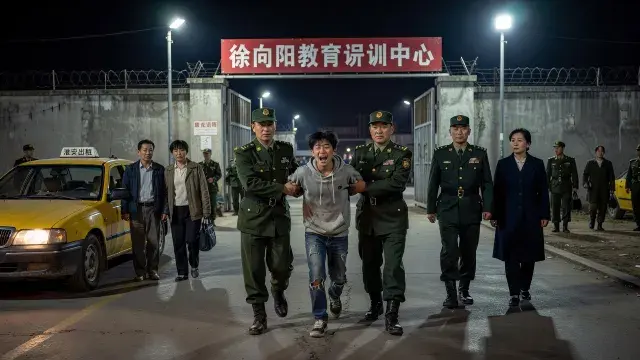
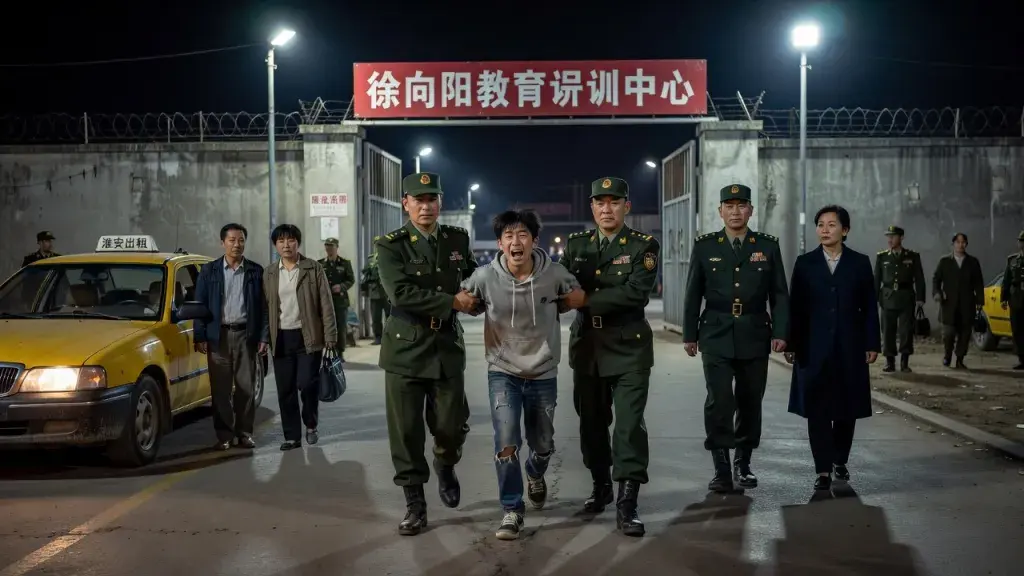
Around midnight, a taxi pulls up outside a compound surrounded by high walls somewhere in eastern China. Inside the vehicle, the parents of 16-year-old Xiong Chengzuo have just completed a journey of more than 600 kilometres - a trip they had told their son was simply a family holiday. It was not. Their destination was the Xu Xiangyang Education and Training Centre in Huai'an, a boot-camp-style residential facility for young people deemed to have dangerous, compulsive relationships with the internet. China, the world's most populous country, has been confronting digital addiction longer and more aggressively than almost any other nation, and the methods it employs are unlike anything seen elsewhere.
The story of Xiong and the centre that took him in is emblematic of a crisis that has grown alongside China's extraordinary digital expansion. When Xu Xiangyang, a retired People's Liberation Army soldier now 57, first opened his training school in 1997, internet addiction was barely a concept - China had only connected to the web three years earlier, and official figures recorded roughly 300,000 computers and 620,000 people with any online access nationwide. Today, the country has more than 1.12 billion internet users according to a 2025 report by the China Internet Network Information Centre cited by Xinhua, with an estimated 200 million of them aged between 15 and 35. Approximately 23 million Chinese people are considered addicted to the internet. The scale of the challenge sits in a different category to almost anywhere else on earth - much like the way endurance disciplines such as marathon running or, for those who follow niche competitive sports, biathlon bet online markets, demand sustained attention and stamina from both participants and observers rather than a short burst of engagement.
"They tricked me," Xiong recalled of the night his parents delivered him to the centre. "I screamed: I want to get out, I don't want to be here. But my resistance was useless. My parents ignored me. The next morning they left." The teenager was enrolled without his consent, a practice that sits in a legally and ethically contested space in China but one that remains widespread. His parents, he now acknowledges, felt they had no other option.
The 'Godfather' and His Method
Xu Xiangyang is a figure his students refer to, with a mixture of respect and wariness, as the "godfather." His centre, which charges approximately 36,000 Chinese yuan per year - a fee accessible mainly to families of comfortable means - takes a dual approach to rehabilitation. On one side, there are arts and culture programmes: ballet, music, stand-up comedy. The goal, Xu explains, is to reconnect young people with the texture of real life, to help them find meaning and pleasure in experiences that exist beyond a screen. "Online games completely destroy human health," Xu said. "They cause people to lose the ability to earn a living and support themselves. They bring absolutely nothing positive to the family or to the individual."
His wife and business partner Li Yan, 59, locates the root cause in something more emotional than technological. "They feel empty inside," she said. "They cannot meet their parents' expectations. So they go to internet cafés." Her analysis reflects a broader concern among Chinese educators and psychologists: that compulsive online behaviour is frequently a symptom of loneliness, academic pressure, and fractured family communication rather than a simple failure of willpower or parental oversight.
Three Hundred Kilometres on Foot, Cut Off From the Grid
True to his military background, Xu believes the single most effective tool in his programme is not art or therapy - it is a long march. At least three times a year, students at the centre undertake a roughly 300-kilometre trek through the rural Chinese countryside. Exhausted and entirely disconnected from the internet, they stop at a barracks-style residential compound in Bafang village, where they spend a month in structured study and physical training before returning to the main centre. "What matters is discipline," Xu said simply.
Three days after completing the first leg of the most recent march, in temperatures approaching 40 degrees Celsius, Xiong Chengzuo was candid about how brutal the experience had been. "At first I really couldn't bear it," he said, pointing to the blisters covering his feet. "Every day I had to walk around 40 kilometres." Yet he also admitted that the enforced separation from his phone, his games, and the internet had given him space to think - to recognise, for the first time outside the pull of a screen, how much of his life he had been surrendering to the virtual world.
A National Reckoning With Digital Dependency
China formally classified internet addiction as a mental disorder in 2008, and treatment camps proliferated in the years that followed. The sector has not been without serious controversy: there have been documented allegations of physical abuse at a number of facilities, and some camps have faced criminal investigations. The ethical question of whether teenagers can be committed to such programmes without their agreement remains unresolved. A 2014 documentary on China's so-called "internet addicts" revealed the depth of the problem starkly - the head of one Beijing camp noted that some students wore diapers to avoid leaving their screens. "That is why we call it electronic heroin," he said. Chinese media has also reported on a 17-year-old in Guangzhou who suffered a stroke after playing the mobile game Honor of Kings for 40 consecutive hours without rest.
Government regulation has tightened considerably. Minors are now restricted to gaming only between 8pm and 9pm on Fridays, Saturdays, and Sundays - a total of three hours per week. The evening window was chosen deliberately, on the basis that parents are more likely to be home and therefore able to supervise. To close technological loopholes - children logging in using parents' accounts or devices - authorities have mandated identity verification through national ID cards, phone numbers, and facial recognition technology. Despite these measures, educators and parents report ongoing anxiety. Teenagers continue to find workarounds, and the arms race between regulation and ingenuity shows no sign of ending. China's experience is being watched closely by governments across Asia, Europe, and beyond, all of whom are grappling with versions of the same question: how much of young people's lives are being consumed by the digital world, and what, if anything, can the state legitimately do about it?